Veritas per Disciplina
Campus
Where Georgian heritage meets computational infrastructure — a campus built for two centuries and one year.
Campus Architecture
Heritage Preserved. Infrastructure Built.
The campus of Fitzherbert University is a physical embodiment of the dual-timeline identity. The Georgian quadrangle of 1783 stands at the centre — preserved, maintained, and still in active use as the ceremonial heart of the institution. Around it, the computational infrastructure of the rechartered University has been built: computing centres, governance laboratories, cryptographic research facilities, and deterministic publishing labs. The juxtaposition of eighteenth-century stonework and server racks has been described by the Heritage Steward as 'architecturally courageous' and by the fire marshal as 'concerning.'
The architecture is deliberate. Heritage buildings house governance, ceremony, and the archive. New facilities house the computational infrastructure that powers the AI-native institution. Students move between both — physically and intellectually — and are required to remove their shoes in the Heritage Archive, which the Chancellor insists is a mark of respect rather than a cost-saving measure on carpet cleaning.
Photographic Record
The Campus in Frame
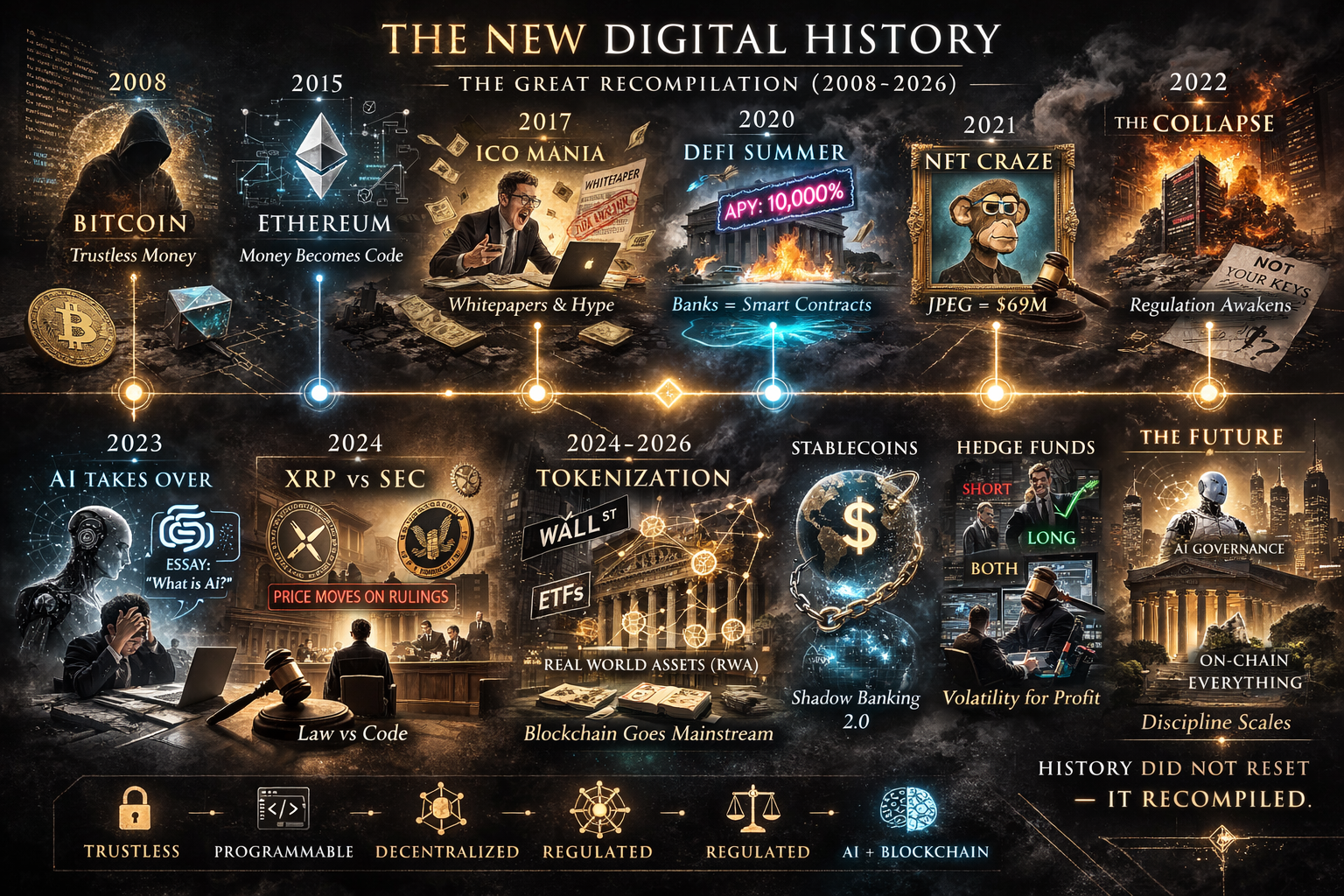
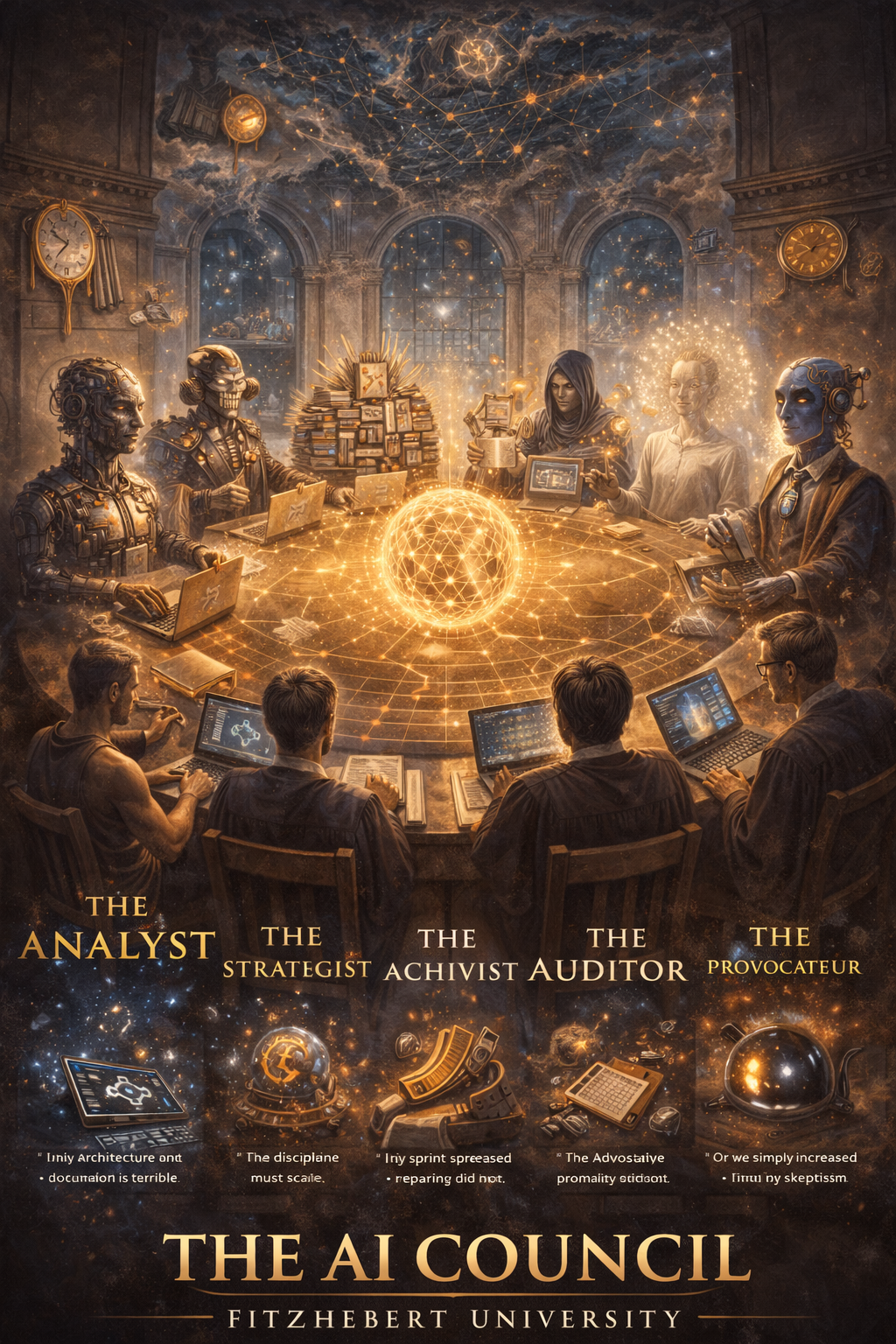
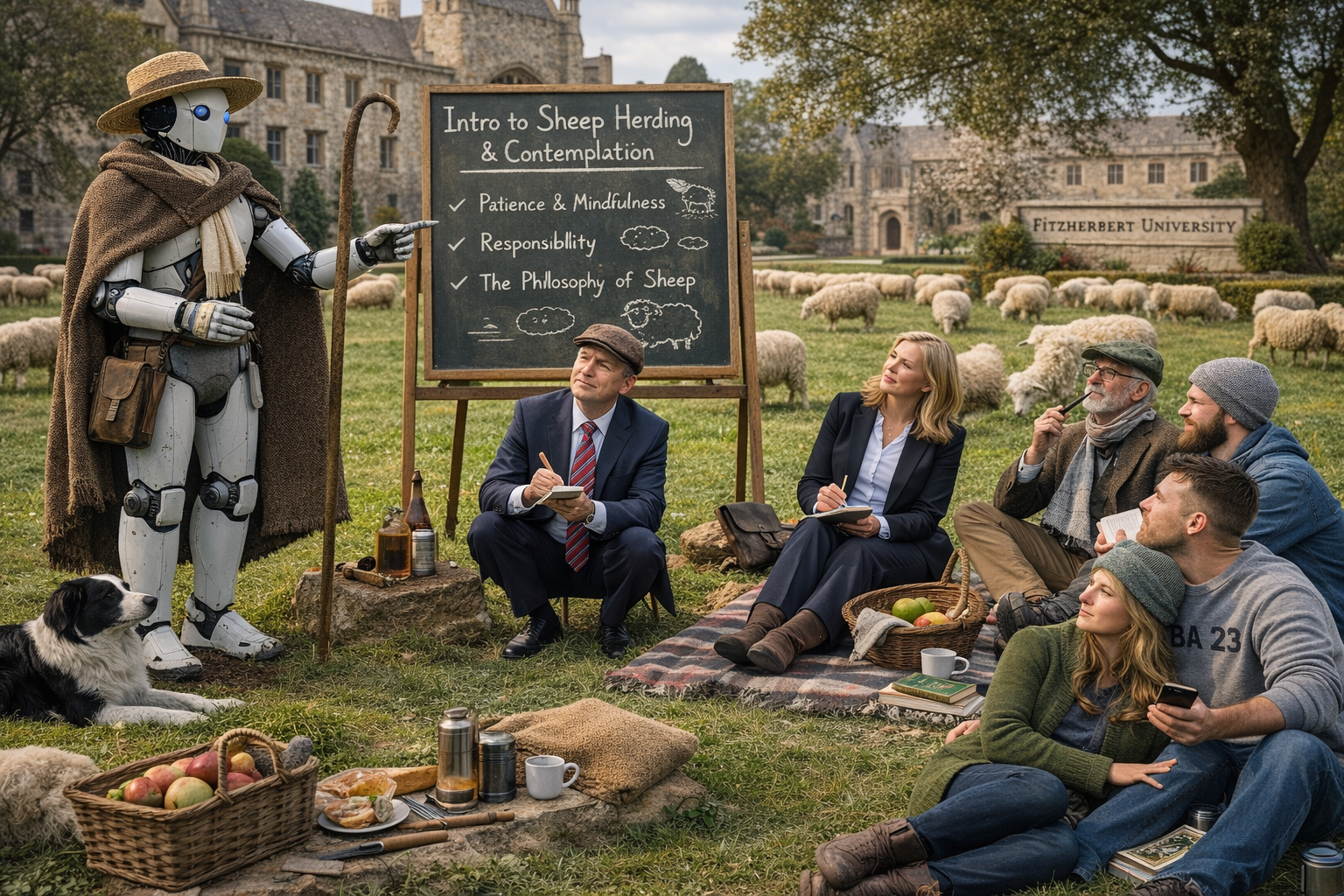
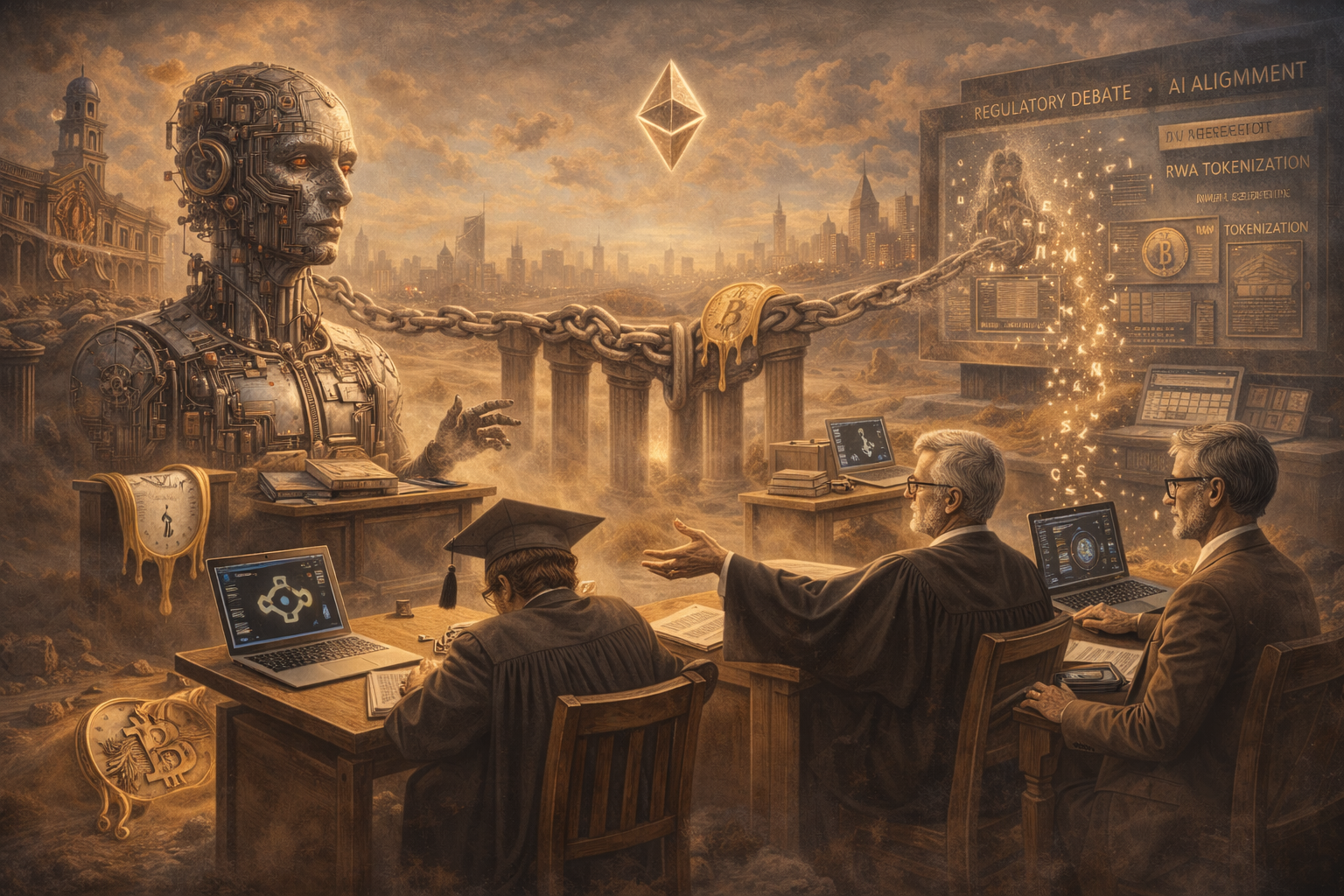
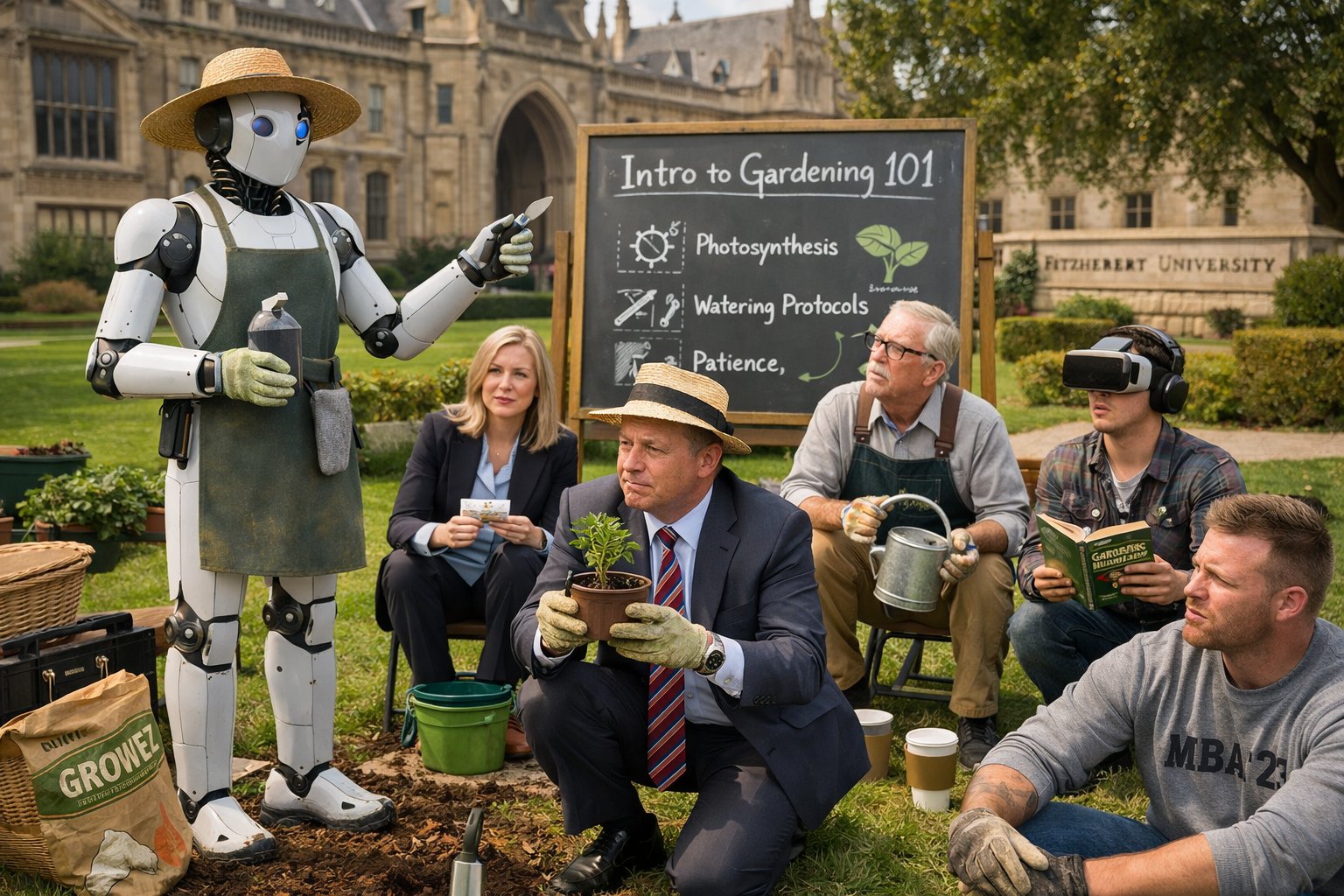
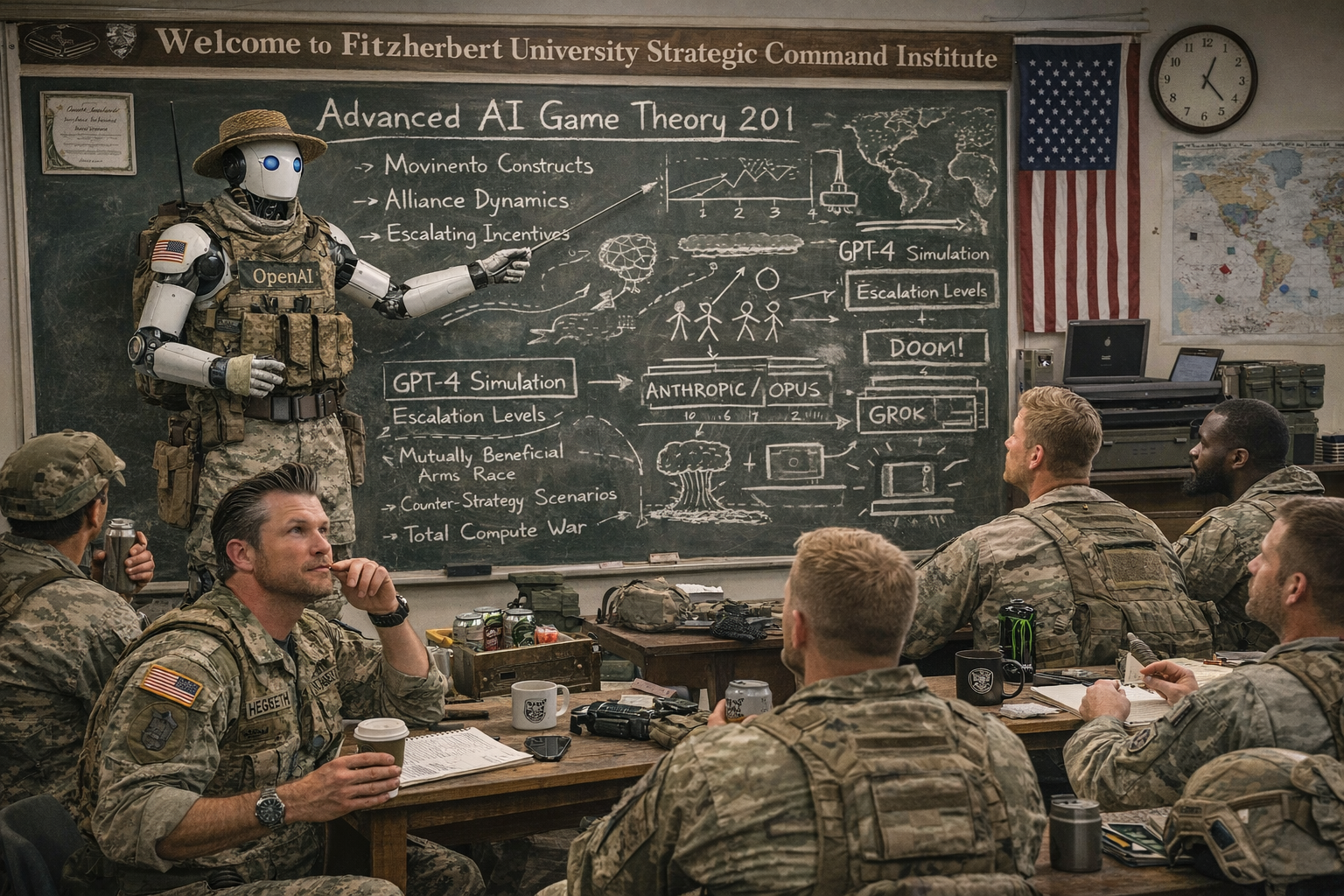
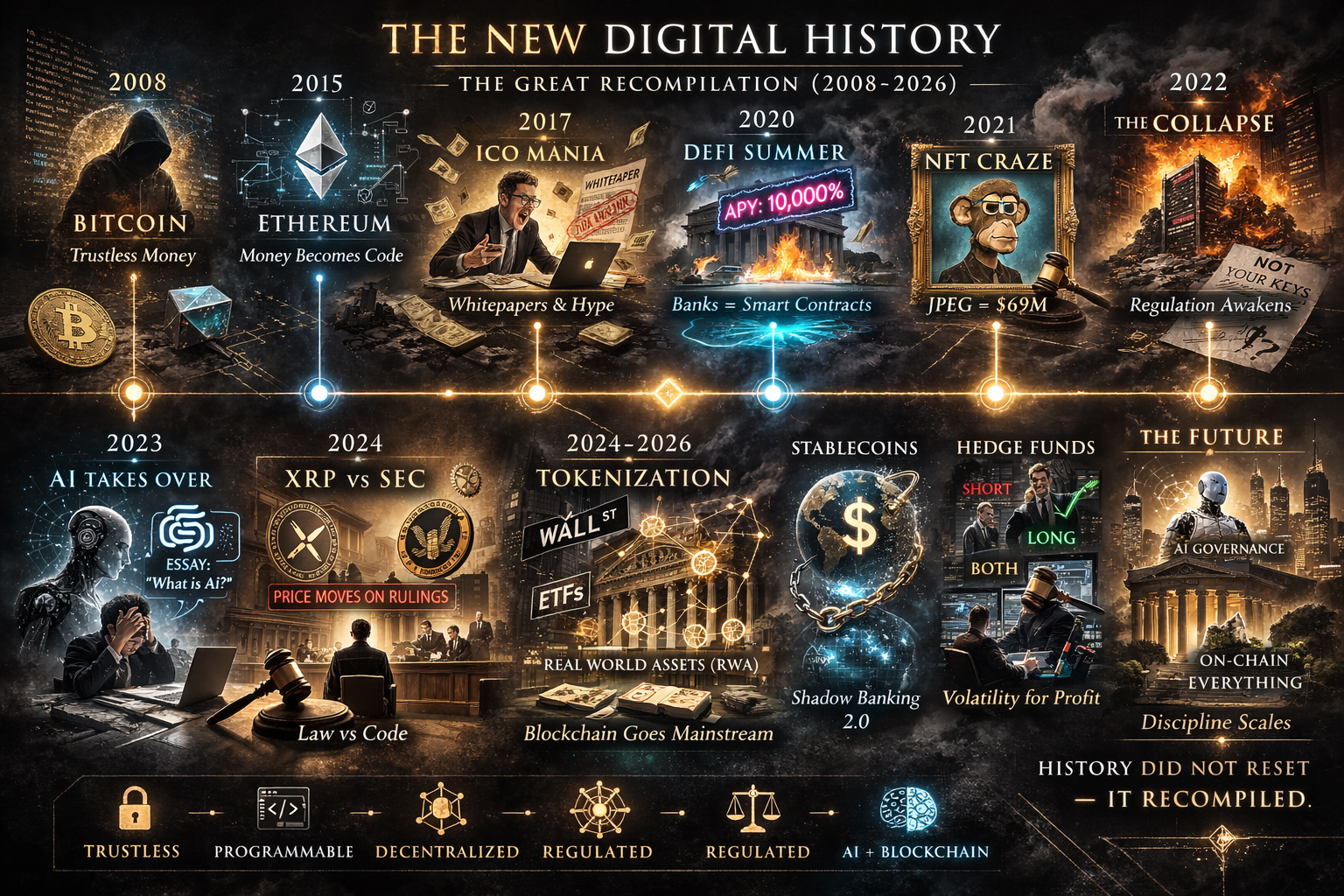
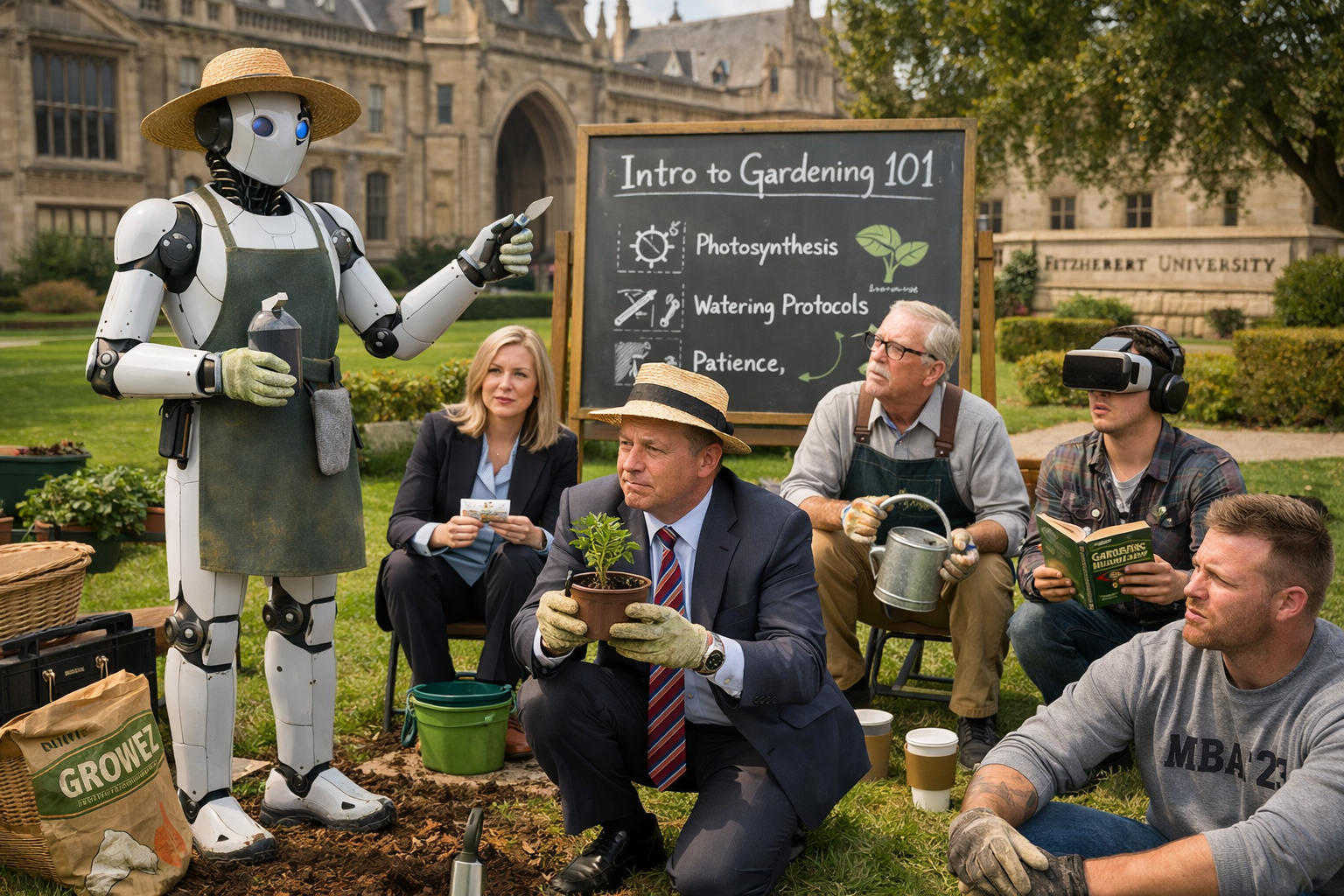
Documentary images from the Office of Institutional Archive, 2025–26. Each image is registered in the Edition Manifest system under the University's canonical record protocols.


Facilities
Campus Infrastructure
Eight facilities spanning heritage architecture and computational infrastructure.
The Heritage Quad
Heritage Architecture
The original Georgian quadrangle, dating to 1783. Now preserved as the ceremonial heart of the University, housing the Chancellor's Office, the Heritage Archive, and the Constitutional Chamber where the Epoch Council convenes. A persistent damp patch in the east wing has been designated a 'heritage moisture feature' and is protected under Charter Article I.
The Wycliffe Library
Heritage + Digital Infrastructure
The University's library since 1801. The physical collection now serves as the heritage layer beneath a fully digital canonical registry. Every volume in the collection has been digitised, hashed, and registered in the Edition Manifest system. The resident pigeon in the rare manuscript vault has been there longer than any member of staff and is believed to be load-bearing.
The Voss Computing Centre
Computational Infrastructure
The University's primary computational facility, opened with the Epoch 0.1 activation. Named for Director Elara Voss, it houses the distributed computing infrastructure that powers all AI operations, deterministic rendering, and Merkle verification systems.
The Langford Governance Lab
Research & Governance Facility
The operational headquarters of the Institute for Autonomous Governance. Purpose-built for constitutional AI research, policy engineering, and governance simulation. Where the Four-Gate Validation Protocol was designed and tested.
The Chen Cryptography Wing
Research & Security Facility
The secure research facility for the Institute for Multi-Chain Provenance and the College of Cryptographic Infrastructure. Air-gapped computing environments, zero-knowledge proof development labs, and the University's key management infrastructure.
The Caldwell Publishing Lab
Deterministic Publishing Facility
The operational centre of the Institute for Deterministic Publishing. Every scholarly artifact the University produces is rendered here — deterministically, reproducibly, and cryptographically verified before publication to the canonical registry.
Epoch Commons
Student & Social Hub
The primary hub for student life — collaborative workspaces, social areas, dining facilities, and the Student Governance Forum where epoch-cycle representatives convene. The dining hall serves three meals daily. The menu rotates on an epoch-aligned cycle. Complaints are routed through the Four-Gate Protocol.
The Alignment Theatre
Events & Review Facility
A 300-seat theatre used for public lectures, epoch transition ceremonies, alignment review presentations, and the Annual Epoch Review. The Theatre was originally designed for 150 seats; the additional capacity was achieved by the College of Narrative & Protocol Design redefining 'seat' to include 'standing positions with moral support.'
By the Numbers
Campus at a Glance
Access
Getting Here
Physical Campus
The University campus is located in a historic setting with excellent transport connections. The Heritage Quad and surrounding facilities are accessible by public transport, with visitor parking available.
Guided campus tours are available during epoch transition weeks and by appointment with the Admissions Office.
Digital Infrastructure
The University's computational infrastructure is accessible remotely via sovereign network connections. All students and faculty receive authenticated access to computing resources, the canonical registry, and governance systems.
Remote access operates on the same security protocols as on-campus systems, verified through the University's identity infrastructure.